







A Spring Festival program that paired regional folk color with concert-hall craft
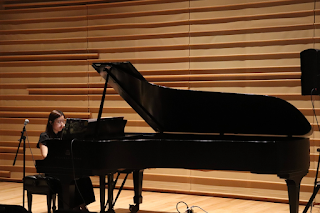
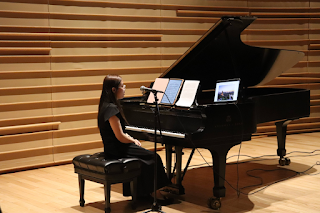
On February 21, Dr. Yingqi Wang made her New York City recital debut at The DiMenna Center for Classical Music with a 60-minute program titled Piano Recital: Chinese Folk Inspirations, East Meets West. Timed for the Spring Festival season, the concert presented Chinese folk-inspired piano repertoire alongside a major work from the standard classical repertoire, inviting listeners to hear how musical identity travels through rhythm, gesture, and pianistic color.
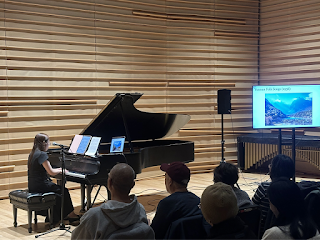
The event was listed as sold out on the public Eventbrite event page, an indicator of strong audience interest for a focused, culturally specific program. Rather than treating the theme as a slogan, Dr. Wang shaped the evening as a guided listening experience. She combined performance with brief spoken introductions for each work, and she supported the narrative with slides. The slides included composer photos, short biographical notes, and scenic images tied to the regions represented in the music, including landscapes associated with Yunnan and Shaanxi. Together, the spoken guidance and visuals offered audiences a clear path into repertoire that many in the room were hearing live for the first time.
From the opening set through the closing Mozart sonata, Dr. Wang’s playing favored clarity of line and disciplined voicing. Her interpretations emphasized structure and character rather than surface effect. The result was a recital that felt both accessible and serious, with cultural context presented as an integral part of musicianship.
Regional voices at the keyboard: Yunnan’s lyricism and North Shaanxi’s grit
Dr. Wang opened with Jianzhong Wang, a composer whose piano arrangements and adaptations have played a central role in bringing folk material into modern recital settings. The program began with excerpts from The Folk Songs of Yunnan: “Dali Girls,” “Following My Lovers,” and “Song of the Mountains.” These pieces ask a pianist to translate vocal inflection and regional color into a language the piano can speak. Dr. Wang’s phrasing kept melodies conversational and unforced, allowing the folk contours to emerge naturally. She shaped lines with subtle timing and careful pedaling, maintaining transparency even when textures thickened.
In “Dali Girls,” Dr. Wang shaped the melodic line with a vocal, singing tone and a natural sense of rubato, allowing the music to unfold as a continuous narrative rather than a set of gestures. “Following My Lovers” unfolded with a lighter touch and gently shaped peaks, and “Song of the Mountains” carried a sense of open space, supported by clean balance across registers. What stood out across the set was Dr. Wang’s control of tone production. She varied colors without blurring harmony, and she kept inner voices present enough to give the miniatures a clear architectural spine.
The recital then shifted to The Folk Songs of North Shaanxi with “Embroidering the Golden Plaque” and “Red Flowers Blooming All Over the Mountain.” If the Yunnan selections leaned toward lyric brightness, the Shaanxi pieces brought a tougher profile, shaped by stronger rhythmic accents and a more direct emotional intensity. Dr. Wang made that contrast audible immediately. Her attack became firmer and more vertical, with sharper articulation that clarified the music’s backbone.
“Embroidering the Golden Plaque” benefited from Dr. Wang’s attention to line within repetition. She kept patterns consistent enough to anchor the style while introducing slight shifts in color at phrase endings, which prevented the writing from becoming mechanical. In “Red Flowers Blooming All Over the Mountain,” she leaned into the music’s communal drive and forward motion, projecting energy that filled the hall without sacrificing detail. The contrast between the Yunnan and Shaanxi sets also clarified an important point of the evening. Chinese folk-inspired piano repertoire is not a single style. It is a broad landscape of regional idioms, each with its own rhythmic language, melodic shapes, and emotional temperature.
Opera gesture and modern pianism: Zhang Zhao’s “Pi Huang”
At the center of the program was Pi Huang by Zhao Zhang, a dramatic work influenced by traditional Peking opera gestures and colors. The piece draws on theatrical impulse and stylized musical movement, and it challenges a pianist to shift character quickly while keeping a coherent dramatic thread.
Dr. Wang approached Pi Huang as a narrative rather than a spectacle. When the writing called for angular emphasis, she delivered it with crisp attacks and focused resonance, keeping the sound bright yet controlled. When the music opened into more vocal or lyrical contours, she softened the tone and allowed lines to bloom before tightening tempo and articulation again as the drama sharpened. These shifts felt purposeful, and they helped the audience follow the work’s internal logic.
The performance also benefited from Dr. Wang’s ability to differentiate textures. She distinguished percussive gestures from singing lines through touch rather than exaggerated tempo changes, and she used pedaling sparingly to preserve clarity. This approach brought definition to a piece that can sometimes feel like a rapid series of images. In Dr. Wang’s hands, Pi Huang unfolded as a structured dramatic arc, with tension built patiently and released decisively.
“East Meets West” close: Mozart’s A-minor Sonata, K. 310
After the Chinese folk-inspired and opera-influenced works, Dr. Wang closed the program with Mozart’s Piano Sonata No. 8 in A minor, K. 310. It served as a carefully chosen conclusion that completed the program’s “East Meets West” arc. Rather than relying on contrast alone, the ending invited listeners to hear connections in pacing, gesture, and narrative shape.
Dr. Wang’s Mozart was direct and energized. She maintained a clear rhythmic drive in the first movement, emphasizing the music’s tension without forcing the sound. Her phrasing highlighted contrast, with sharply defined cadences and a controlled approach to dynamics that kept the dramatic intensity. The second movement offered a calmer center. Dr. Wang sustained the line with stable pacing and singing tone, shaping expression through subtle inflection rather than broad tempo flexibility. In the finale, her articulation remained clean, and she maintained clarity under speed, keeping texture readable even in rapid passages.
Audience response and the feeling of cultural exchange
The Spring Festival framing gave the evening a timely context, but the concert’s impact extended beyond seasonal celebration. The repertoire highlighted China’s regional variety and the creative ways composers have transformed traditional material into concert works for the piano. Dr. Wang’s spoken guidance and slides made that transformation legible, and her performance made it persuasive. The result was a room that felt engaged rather than merely entertained.
After the performance, audience members lingered and continued discussing the repertoire and its references, including with Dr. Wang directly. That post-concert conversation reflected the program’s central aim. It created an opportunity for cultural exchange among listeners from different backgrounds. Some audience members arrived already familiar with Chinese musical traditions, while others encountered this repertoire for the first time. The recital provided space for both groups, offering enough context to welcome newcomers and enough musical substance to reward deeper familiarity.
A NYC debut that positioned Dr. Wang as a cross-cultural interpreter
Dr. Yingqi Wang’s New York City recital debut at The DiMenna Center presented a clear artistic identity. Chinese Folk Inspirations: East Meets West was not simply a themed event. It was a carefully curated program that treated Chinese folk-inspired piano music as concert repertoire of depth, regional specificity, and compositional sophistication. Dr. Wang’s playing combined precision with color, and her spoken introductions, supported by slides featuring composers and regional imagery, helped audiences listen with intention and understanding.
In a crowded performance landscape, the recital stood out for its clarity of purpose and its respect for both the music and the listeners. It suggested a forward-looking model for cultural programming in the recital hall, one in which context and performance reinforce each other, and a cross-cultural encounter is built through repertoire, craft, and genuine engagement.